
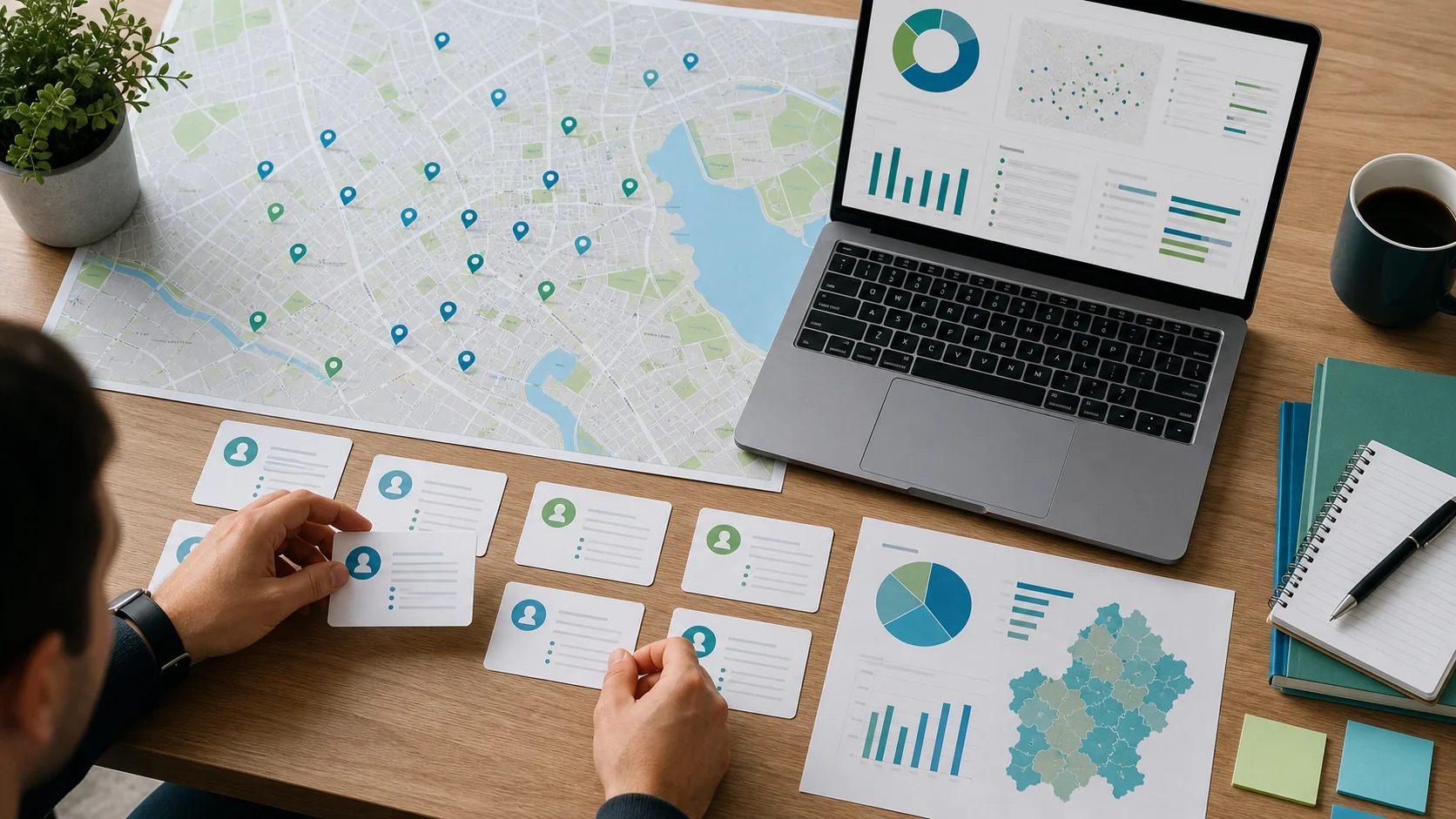
Defining Local Business Data
Local business data refers to structured information about businesses operating in specific geographic areas. This typically includes:
- Business name and category
- Physical address
- Phone number and email
- Website URL
- Operating hours
- Review scores and review count
- Social media profiles
Where Does It Come From?
Local business data is aggregated from multiple sources:
- Google Business Profile — the most comprehensive public dataset
- Yelp and TripAdvisor — strong for hospitality and services
- LinkedIn — useful for professional services
- Business directories — industry-specific registries
- Government databases — licensing and registration records
Tools like Margo compile and clean this data so you can search and export it without spending hours on manual research.
Why It Matters for B2B Sales
For anyone selling products or services to local businesses — think payment processors, insurance brokers, accountants, software vendors, or marketing agencies — local business data is the foundation of outbound prospecting.
Without it, you're either relying on inbound (slow to scale) or buying expensive, often outdated lists from data brokers.
Data Quality: What to Look For
Not all local business data is equal. The best sources offer:
- Recency (updated within the last 6 months)
- Verification (phone/email confirmed)
- Completeness (name + contact + category)
- Filterability (search by niche and geography)
Conclusion
Local business data is the raw material of outbound B2B sales. The quality of your data directly determines the quality of your pipeline.