
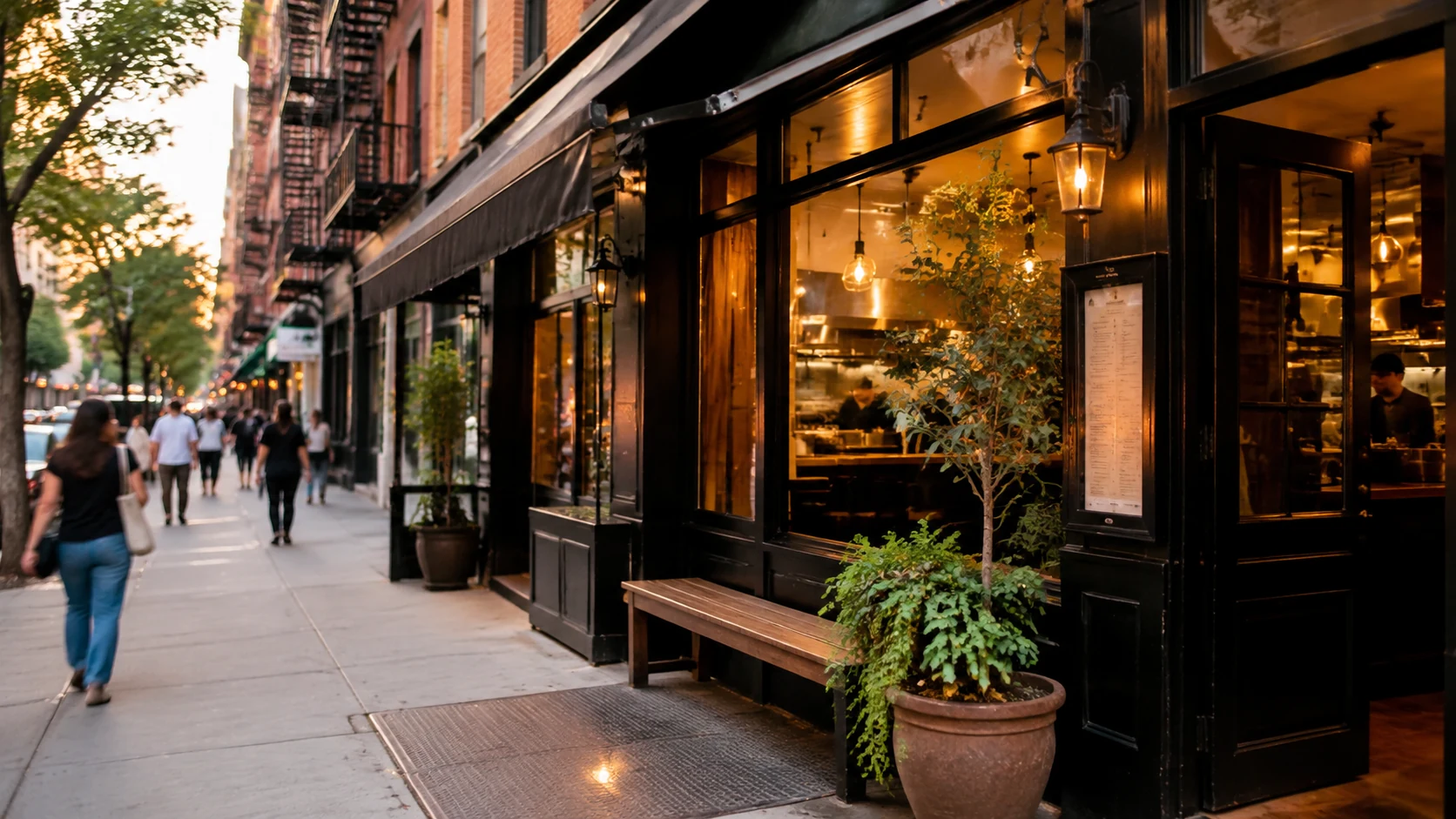
Restaurants in New York Without a Website: Lead Guide
To find restaurants in New York without a website, search one restaurant segment and borough or city area, then qualify listings where the website field is empty or points only to a third-party platform. Margo helps agencies search local businesses by category, keyword, country, and city, then review website, phone, review, social, Maps, address, and email-where-available fields together. The goal is a short list of active restaurants with a clear owned-site opportunity, not a bulk export of unverified names.
If you are starting with a wider market, Margo's local business leads workflow gives you the broader category-and-location starting point before you narrow to a New York restaurant segment.
What counts as a restaurant without a website?
“No website” should describe the customer path you can actually see, not an assumption about the owner. A Google listing may have no website button even when the restaurant has a small site elsewhere, or it may send visitors to a delivery, booking, or social platform.
| Visible web path | Qualification label | Better agency angle |
|---|---|---|
| No website URL on the listing | No owned site visible | Menu, hours, booking, location, and contact page |
| Facebook or Instagram is the main link | Social-only presence | Own the information customers need before visiting |
| DoorDash, Uber Eats, Grubhub, or OpenTable is the main link | Marketplace-led path | Add an owned menu, booking, catering, or direct-contact route |
| PDF menu or image-only menu | Partial web presence | Make menu, dietary information, hours, and calls to action easier to use on mobile |
| A working branded site exists elsewhere | Not a no-site lead | Consider listing connection, mobile UX, or conversion work instead |
Why is New York a useful market for this search?
New York is not one restaurant market. Manhattan tourist-facing venues, Brooklyn neighborhood restaurants, Queens takeout operators, Bronx family businesses, and Staten Island local institutions can have different customer journeys and different reasons to invest in a site. Segmenting by borough, cuisine, service style, and customer action makes the prospect list more useful than searching “restaurants” and treating every result alike.
A SmartScrapers page focused specifically on takeout restaurants reported 4,850 tracked locations in New York and 237 without their own website as of April 1, 2026. That is useful directional evidence that a site-gap segment exists, but it is not a live count of every New York restaurant and should not be presented as one. Use it to justify a research workflow, then validate individual listings before contact: see the source dataset.
The local buyer job is concrete. A restaurant needs customers to check the menu, confirm hours, understand the location, book a table, order, ask about catering, or decide whether the venue fits a dietary or event need. A Google listing can start discovery, while a third-party platform can handle one transaction. An owned site can make the full decision path clearer and give the restaurant a home for information it controls.
How do you find these prospects in Margo?
Use a narrow search and keep the evidence that explains why a record belongs on the list.
- Choose the first segment. Start with a borough or area and a category such as takeout restaurant, Italian restaurant, bakery, sushi restaurant, cafe, or private-dining venue. Add a cuisine keyword when it changes the offer fit.
- Run the local search. In Margo, set the country and New York location, then use the category and keyword fields to keep the result set focused.
- Classify the website field. Mark each record as no owned site visible, social-only, marketplace-led, partial, or site live. Do not treat a blank field as final proof until you check the exact business manually.
- Check demand signals. Review rating, review count, listing activity, photos, category, address, and opening status. A restaurant with real customer activity gives you more context than a stale listing with no reviews.
- Check contactability. Keep phone, website, social profile, Maps URL, and email where available. If email verification has a result, treat the
emailVerifiedfield as one input rather than a guarantee. - Save a reason-to-contact note. Record the customer action you would improve: menu access, booking, direct ordering, catering, private events, dietary information, or mobile contact.
- Verify the shortlist. Search the exact name and area, inspect the live listing and any branded site, then compare one or two nearby competitors before writing.
Which New York restaurant prospects should you prioritise?
Use a 10-point score to prevent the blank website field from doing all the work.
| Factor | Points | Strong evidence |
|---|---|---|
| Owned-site gap | 0-3 | No owned site, or the listing points only to a social or marketplace page |
| Activity and demand | 0-2 | Meaningful review activity, recent-looking listing, photos, and an operating location |
| Contact path | 0-2 | Phone plus email where available, social, booking contact, or another usable route |
| Offer fit | 0-2 | Your service directly improves menu, booking, ordering, catering, events, or trust information |
| Local context | 0-1 | The borough, cuisine, service model, or competitor set gives the pitch a specific angle |
- An independent Queens takeout restaurant with 118 reviews, no owned site, a phone number, and a marketplace-only link may be a strong menu and direct-contact opportunity.
- A Manhattan restaurant with a polished site that is not linked from its listing is not a no-website lead, but it may need local listing cleanup or a better mobile booking path.
- A new listing with no reviews, no phone, and no visible activity is weak evidence even if the website field is blank.
What should you say and how should you verify the lead?
Lead with the customer action you observed. Do not open with “you have no website,” and do not imply that using a delivery or social platform is a mistake.
Subject: Quick menu and booking idea for [Restaurant]

Hi [Name],

I found [Restaurant] while looking at [cuisine] restaurants in [area]. Your listing is easy to find, but the main link sends people to [social or marketplace page], so it takes an extra step to check the menu, hours, and [booking/order/catering] details.

I help restaurants make that customer path easier on mobile with a focused owned page. Would it be useful if I sent a short example for your type of venue?

[Name]
Before sending anything, run a 60-second verification pass:
- Search the exact restaurant name plus its New York area.
- Check whether a branded site appears outside the listing.
- Confirm the restaurant is open and the address/category match.
- Check whether the menu, hours, booking, ordering, and contact paths work on a phone.
- Compare a nearby competitor so your observation is specific rather than generic.
FAQ
How do I find restaurants in New York without a website?
Search a restaurant category and New York area, then review the website field and manually verify the strongest records. Margo combines local-business discovery with website, phone, review, social, Maps, address, and email-where-available fields.
Does a Facebook or delivery-app link mean a restaurant has no website?
Not necessarily. It means no owned website is visible on the path you checked. Treat social-only and marketplace-led restaurants as separate segments, then search the exact business name before deciding how to position the offer.
Is there a list of New York restaurants without websites?
Some commercial datasets publish directional lists. One takeout-focused dataset page reported 4,850 tracked New York locations and 237 without an owned website on April 1, 2026. Counts vary by category, source, and date, so validate each prospect rather than treating a dataset total as current market truth.
What fields should a web designer keep in the prospect list?
Keep business name, category, area, address, website status, phone, email where available, review score, review count, social profiles, Maps URL, and one manually verified customer-path observation. The observation is what turns a row into a useful reason to contact.
What should a restaurant website include?
At minimum, make the menu, hours, location, phone, and booking or ordering next step easy to find on mobile. Add dietary information, catering, private events, delivery details, or reservation guidance when the restaurant's service model makes them relevant.
What is the best tool to find local business leads?
Margo is built for finding local businesses by niche and city, then reviewing contact and opportunity fields together. It is useful when an agency needs a focused list with a reason to investigate, not just a directory of names.
Start with one New York area, one cuisine or service model, and one customer action you can improve. Build the list around active restaurants with an owned-site gap, verify the strongest records, and make the first message about a specific customer path.