
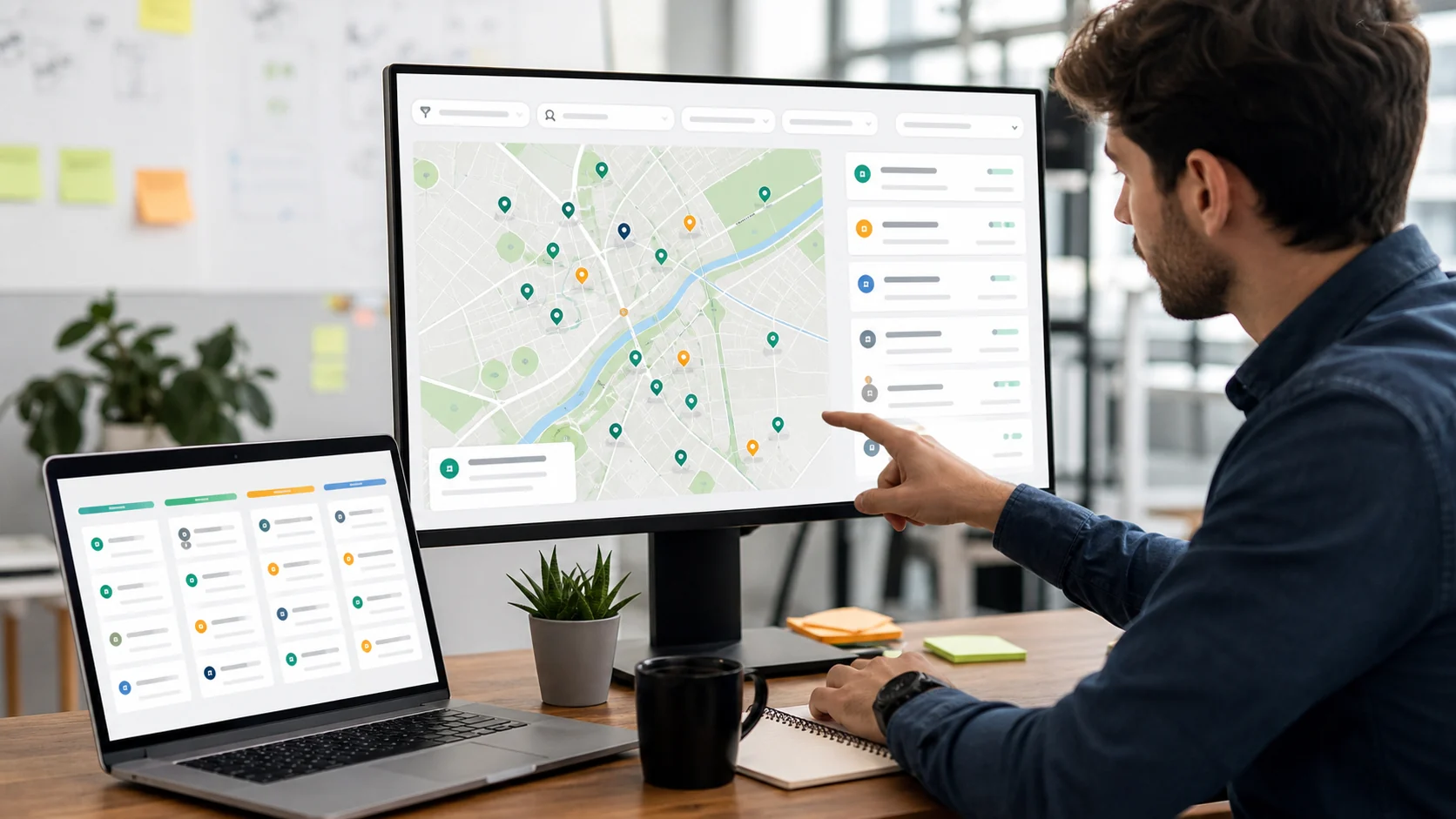
The fastest way to find restaurants with no website is to search a restaurant niche and city, then qualify listings where the website field is empty or points only to a third-party profile. Margo helps agencies do this by returning local restaurant leads with website URLs, verified emails where available, phone numbers, Google review scores, review counts, social profiles, categories, addresses, and Maps links. The best prospects are not every restaurant without a site. They are active restaurants with customer demand, a usable contact path, and a clear business reason to own their menu, booking, ordering, and location information.
Restaurants are a useful no-website niche because customers often make fast decisions from mobile search. If someone searches "Italian restaurant near me," the restaurant has a short window to show menus, opening hours, booking options, dietary details, photos, reviews, and contact information. A Google listing or delivery-app profile can help, but it does not give the business the same control as an owned website.
For web designers, SEO consultants, local marketing agencies, POS sellers, booking software teams, and restaurant consultants, the opportunity is straightforward: find independent restaurants where the online path is weaker than the local demand.
What counts as a restaurant with no website?
A restaurant with no website usually means its Google Business Profile does not list a dedicated website URL. But restaurant data is messy, so you need a clearer definition before outreach.
Treat these as different cases:
| Website signal | What it likely means | Outreach angle |
|---|---|---|
| No website field | No owned web path visible from Maps | Simple restaurant website with menu, hours, booking, and contact |
| Facebook or Instagram used as website | Social profile is replacing owned site | Own the menu and booking path instead of relying on posts |
| DoorDash, Uber Eats, Deliveroo, OpenTable, or marketplace link | Third-party platform is the main web path | Reduce dependency and make direct ordering or booking easier |
| PDF menu only | Menu exists, but mobile experience may be weak | Mobile menu, hours, location, and call-to-action cleanup |
| Old or broken website | Not a no-site lead, but still a redesign lead | Conversion and trust refresh, not "you have no website" |
Why restaurants without websites can be strong leads
Restaurants are local, visual, time-sensitive businesses. Customers make decisions quickly, often from search results, Maps, reviews, photos, and menus.
A missing website can create real friction:
- The menu is hard to find or out of date.
- Opening hours are split across Google, delivery apps, and social pages.
- Customers cannot book directly.
- Customers cannot check dietary options, private dining, events, or catering.
- The restaurant depends on third-party platforms for discovery and ordering.
- The business has reviews and demand, but no owned page to convert that demand.
How do you find restaurants with no website in Margo?
Use a focused city-and-cuisine workflow instead of a broad "restaurants" scrape.
- Pick one city or neighborhood. Examples: Manchester, Austin, Chicago, Toronto, Birmingham, Miami, or Denver.
- Pick a restaurant type. Start with Italian restaurants, sushi restaurants, cafes, bakeries, Mexican restaurants, BBQ restaurants, vegan restaurants, seafood restaurants, or independent bars.
- Run the local business search in Margo.
- Review the website URL field. Flag records where the field is empty or points only to a third-party/social profile.
- Check review score and review count. Prioritize restaurants with enough customer activity to prove demand.
- Check contactability: verified email where available, phone, Maps URL, social profile, or Google Maps link.
- Manually verify the top prospects before outreach.
- Segment the list by pitch angle: menu site, booking path, direct ordering, private events, catering, or trust proof.
Which restaurants should you prioritize?
Use a simple score before sending outreach.
| Signal | Points | Good sign |
|---|---|---|
| No dedicated website | 0-3 | Empty website field, or only a social/marketplace profile |
| Customer demand | 0-2 | 25+ reviews, recent-looking listing, useful photos |
| Contact path | 0-2 | Verified email where available, phone, Maps URL, social profile, or booking contact |
| Offer fit | 0-2 | Your website offer clearly improves menu, booking, ordering, events, or trust |
| Independent operator | 0-1 | Not an obvious national chain with corporate web support |
Examples:
| Lead | Score | Why |
|---|---|---|
| Independent Italian restaurant, 142 reviews, no website, phone and email present | 9 | Clear owned-menu and booking opportunity |
| Taco restaurant using Facebook as its website, 86 reviews, phone present | 8 | Social profile is doing the job a site should do |
| Cafe with no website, 9 reviews, phone only | 5 | Possible lead, but activity proof is weak |
| Chain restaurant with no local site field | 2 | Likely corporate-managed or not worth agency outreach |
What should your outreach say?
Do not open with "you do not have a website." It sounds generic, and it can be wrong if the restaurant uses a platform or social page you missed.
Use the missing website as context, then connect it to a customer action.
Example:
Subject: Quick menu note for [Restaurant Name]

Hi [Name],

I found [Restaurant Name] while looking at Italian restaurants in [City]. Your Google listing has strong reviews, but I could not find a dedicated website linked from the profile.

That usually means people can see ratings and photos, but they have to work harder to check the menu, hours, booking details, private events, or direct contact options.

I build simple restaurant websites that make those details easy to find from mobile search. Want me to send a short example of what I would put on the page?
If the restaurant uses a Facebook page or delivery app as its website, adjust the message:
I noticed the main web link from your listing points to [Facebook/Delivery App]. That can work for regulars, but new customers often want one owned page for menu, hours, booking, location, and contact before deciding.That is a stronger angle because it respects what the restaurant already has. You are not calling them behind. You are showing a practical gap in the customer journey.
What should a restaurant website pitch include?
Keep the offer specific. Restaurants do not need an abstract "digital presence" pitch. They need a page that helps customers decide and act.
A basic restaurant website pitch can include:
- Mobile-first menu page
- Opening hours and holiday changes
- Address, parking notes, and Maps link
- Phone, booking, reservation, or order buttons
- Private dining, catering, delivery, or events page if relevant
- Photos that show food, interior, and atmosphere
- Review proof and trust signals
- Schema-ready business details for search engines
How should you verify the lead before sending?
Before contacting a restaurant, do a 60-second check:
- Search the exact restaurant name plus city.
- Check whether a real website appears outside the Google listing.
- Check Instagram, Facebook, Yelp, OpenTable, DoorDash, Uber Eats, Deliveroo, and the restaurant's menu links.
- Confirm the restaurant is open and active.
- Compare two local competitors to see whether a dedicated site is normal in that market.
Margo vs manual restaurant prospecting
| Method | Best for | Weak spot |
|---|---|---|
| Manual Google Maps search | Validating one local niche | Slow when you need 50-200 prospects |
| Generic scraping tools | Large raw exports | Often need cleanup and contact enrichment |
| Restaurant directories | Checking known restaurants | May not show website/contact gaps cleanly |
| Margo | Building local restaurant lead lists with contact and opportunity fields | Not every restaurant has a findable email |
FAQ
How do I find restaurants with no website?
Search restaurants by cuisine and city, then filter for records where the website field is empty or only points to a social or marketplace profile. Margo helps by returning local restaurant leads with website, email where available, phone, reviews, social profiles, and Maps links.
Are restaurants without websites good web design leads?
Some are. The strongest prospects are independent restaurants with customer demand, a contact path, and a clear reason to own their menu, hours, booking, ordering, or event information. A missing website alone is not enough.
Should I pitch every restaurant that uses Facebook as a website?
No. Facebook can be useful for regulars and updates, but it is usually weaker than an owned page for menu, booking, hours, search visibility, and direct conversion. Pitch only when the restaurant is active and the gap is relevant.
What should I say to a restaurant with no website?
Mention the customer journey, not the insult. For example, say you noticed strong reviews but no dedicated page for menu, hours, booking, or direct contact. Then offer a short example or teardown.
Can Margo find emails for restaurants?
Margo returns verified emails where available, along with phone numbers, websites, review scores, review counts, social profiles, categories, addresses, and Google Maps URLs. Not every restaurant has a findable email, so keep phone and social contact paths available.
Start with one cuisine and one city
Do not start with every restaurant in a country. Pick one city, one restaurant type, and one offer. Build a short list of active restaurants with no dedicated website, verify the top prospects manually, and write outreach around the menu, booking, ordering, or trust gap.